
Room Design: Seeing It Before It Exists
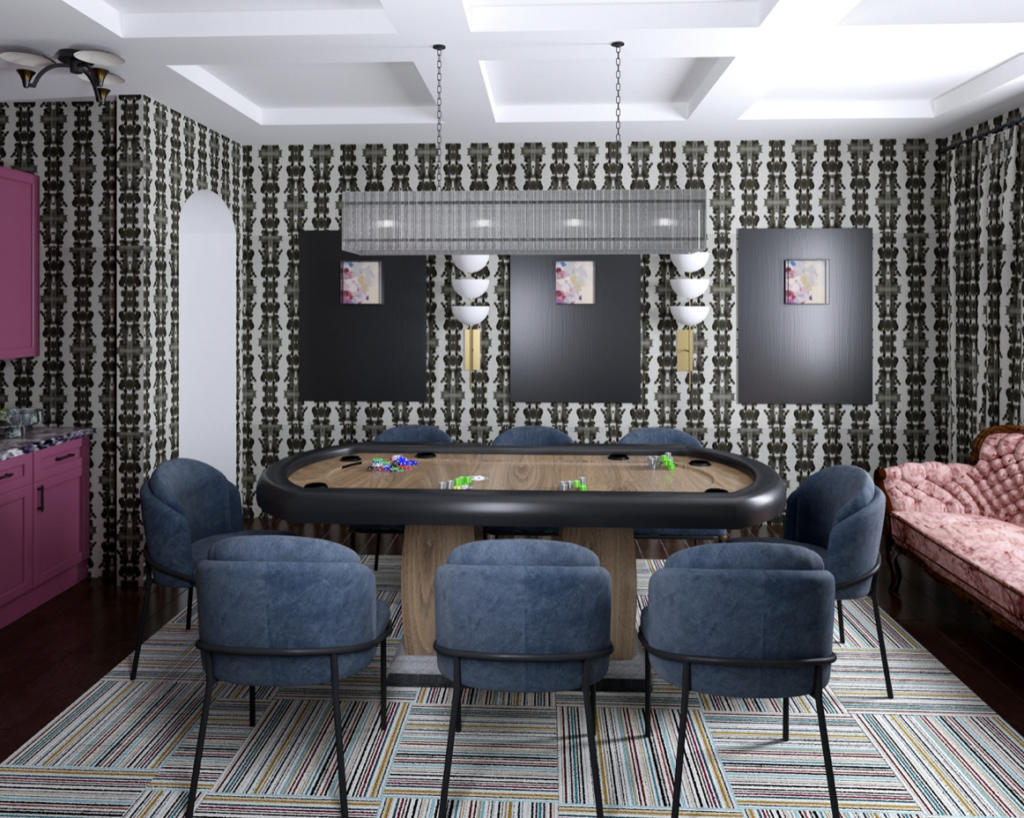
Rendering:
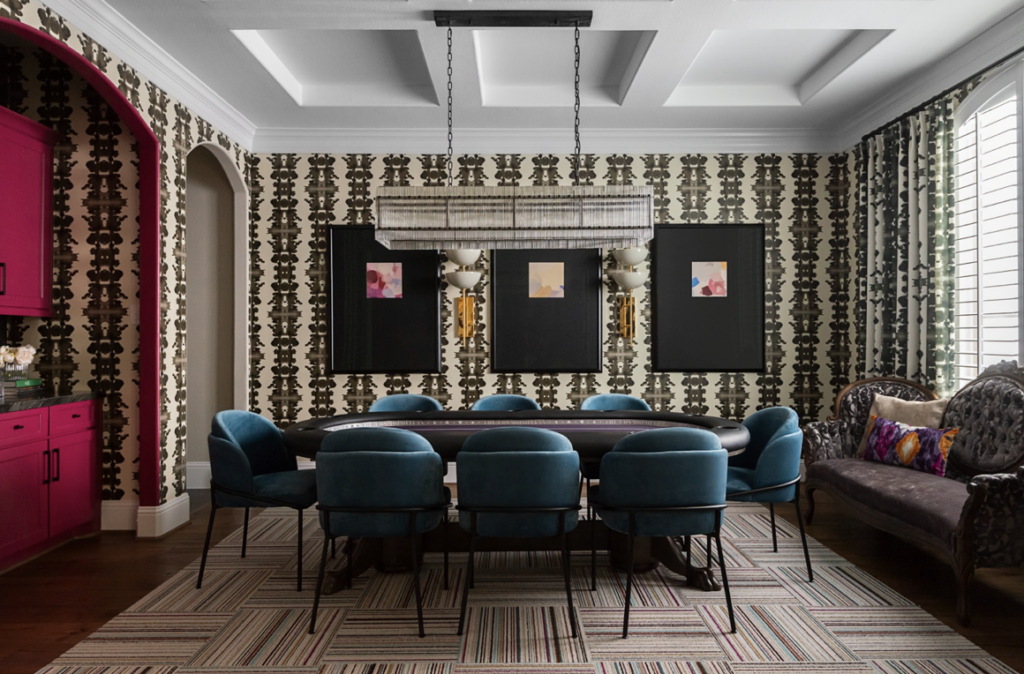
Reality:
Every client says some version of it.
“I’m a visual person.”
We totally get it. You’re being asked to make decisions about a space you can’t yet walk into, and sometimes those decisions are not small.
At our Vista Lake project, the poker room was meant to feel transportive. The client kept coming back to one reference: the energy of The Cosmopolitan of Las Vegas. Moody, layered, a little unexpected, and unapologetically dramatic.
It was a big idea. The kind that can either feel incredible or completely off if it’s not handled just right.
On paper, it could have easily read as too much. Too dark. Too bold. Too far.
The rendering changed that.
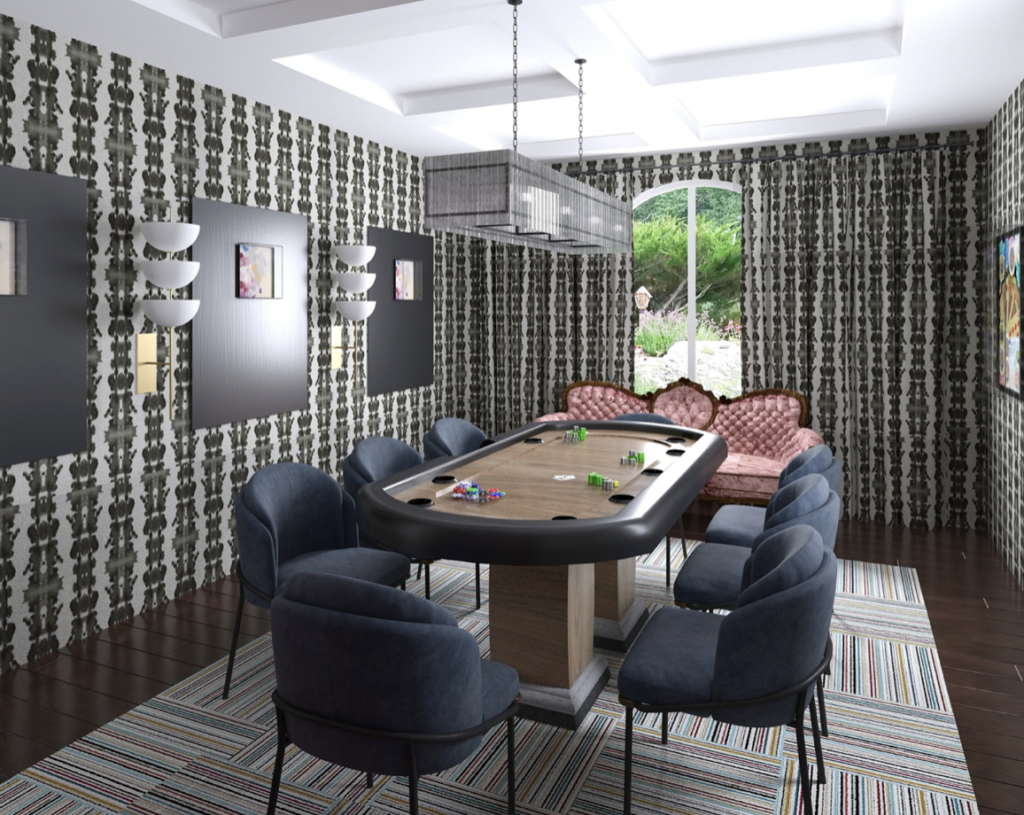
Rendering:
Reality:
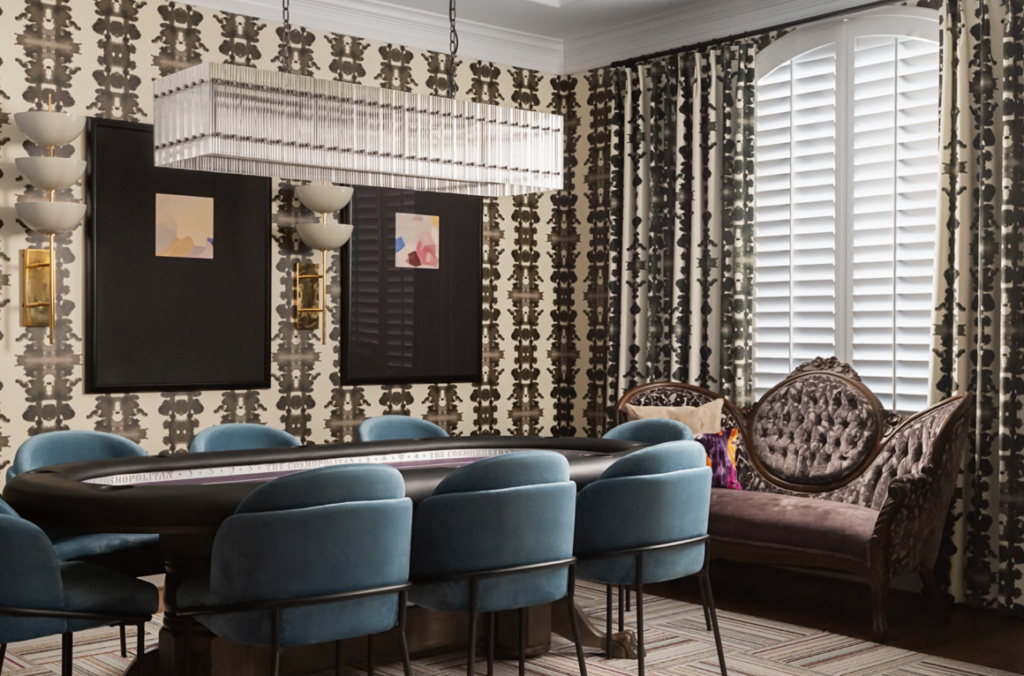
It gave the room shape early. You could see how the lighting would settle into the walls, how the materials would play off each other, and how the depth and contrast would create atmosphere instead of heaviness. What might have felt “totally crazy” in conversation started to feel intentional, grounded, and even inevitable.
There’s a moment when a design crosses that line.
From question to clarity.
From risk to confidence.
From “are we sure?” to “this is going to be incredible.”
That’s what a strong rendering does. It doesn’t tone a concept down, it lets you fully understand it.
Rendering:
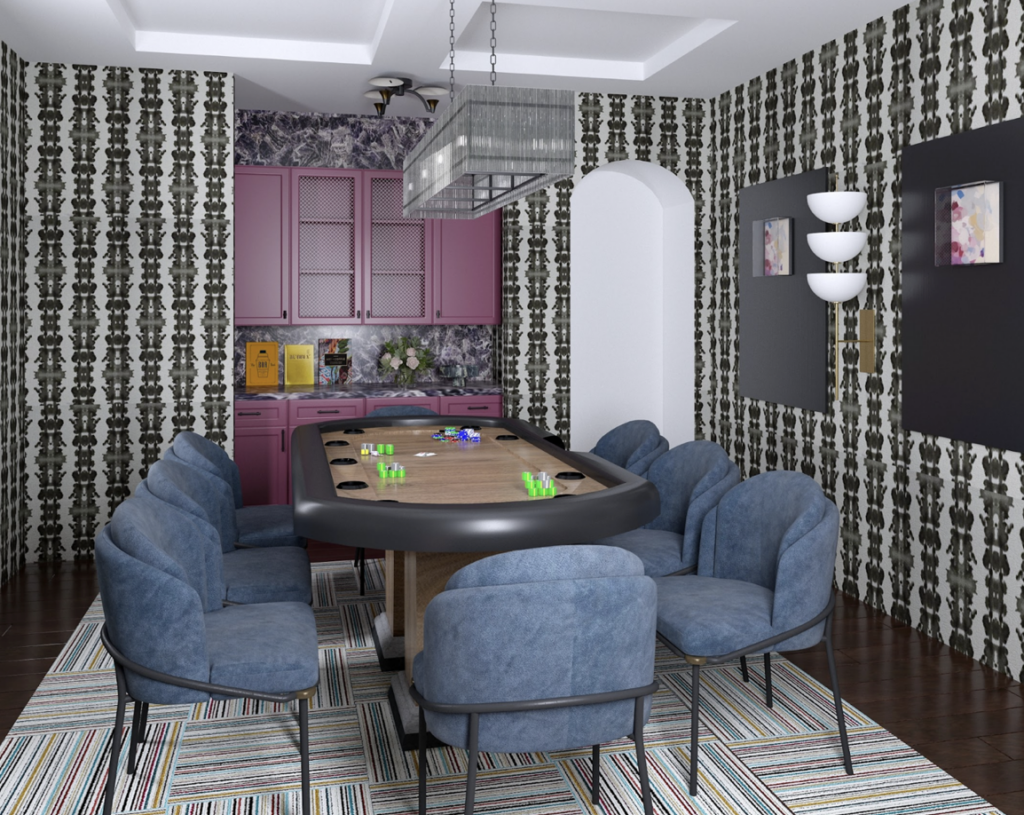
Reality:
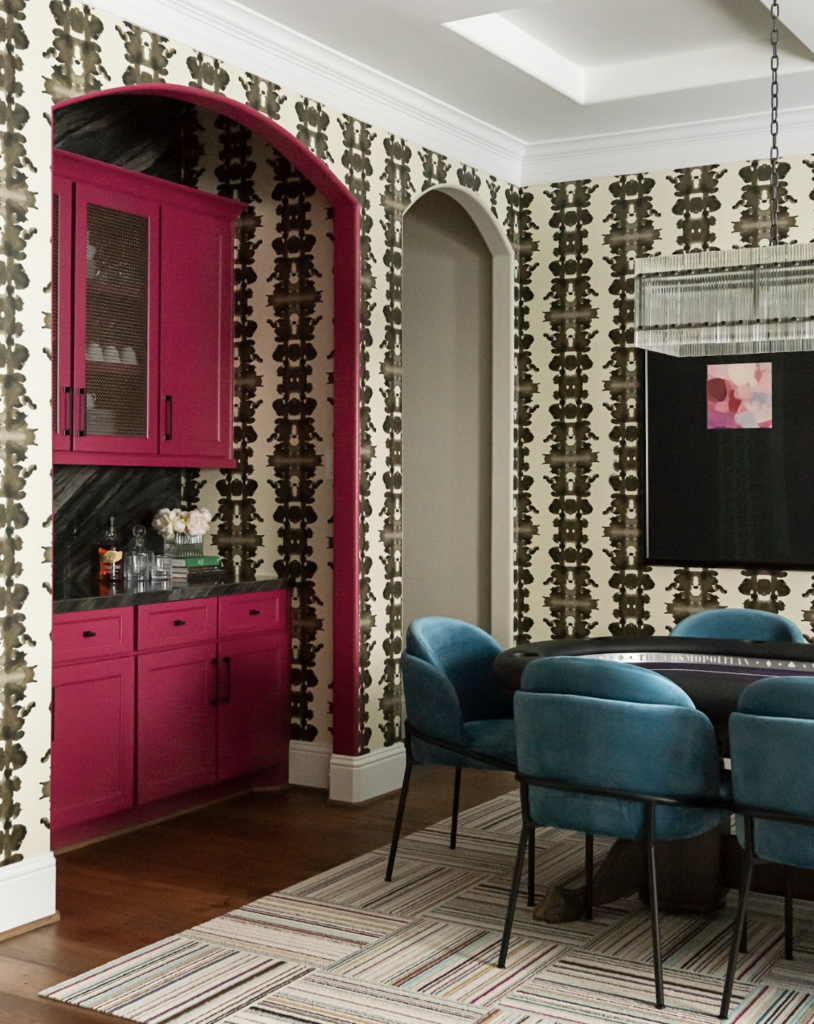
And when you understand it, you can actually go all in.
The finished poker room is exactly what it was meant to be: dramatic, immersive, and transportive in the best way. But it didn’t get there by chance. It got there because everyone could see it clearly before a single piece was installed.
What is a photorealistic rendering in interior design?
A photorealistic rendering is a detailed visual that shows exactly how a space will look once completed, including furniture, lighting, materials, and layout.
Why use renderings for bold interior design ideas?
Renderings allow clients to fully understand dramatic or high-impact concepts before installation, reducing uncertainty and increasing confidence in the design.
Can renderings help avoid design mistakes?
Yes. They allow designers and clients to refine scale, layout, and material combinations before anything is purchased or installed.